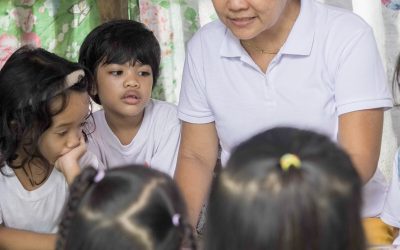
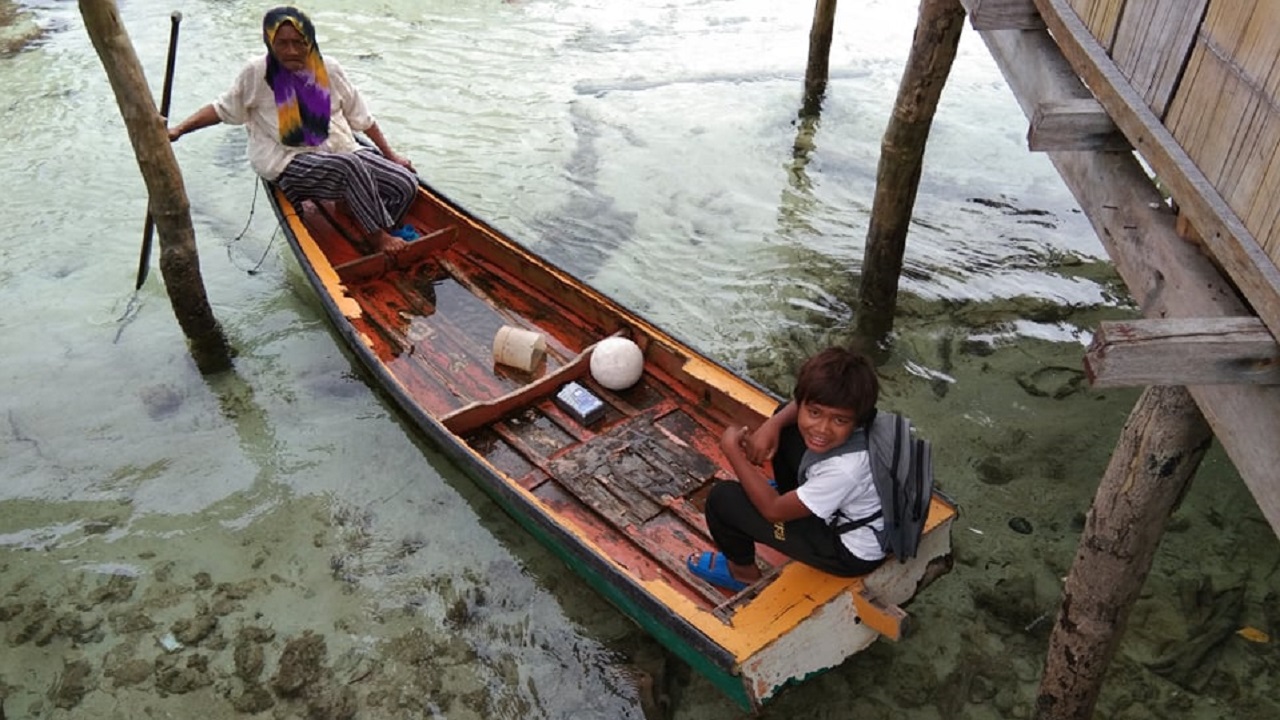
Bajau children living in stilt huts and floating houses are given the chance to learn in school.
Living along the coast of Sulu island in the Philippines are the Bajau people. Known for being sea nomads, most of them live in stilt huts or crammed makeshift floating houses on shallow waters, relying on the sea for survival. Seven-year-old Supiya and her seven siblings belong to this ethnic group. Their father is a fisherman, while their mother does laundry work to earn extra money.
There is no electricity or water where they live. Because of extreme poverty and their nomadic lifestyle, the Bajau children are unable to learn in school. The few who can attend school are usually discriminated against due to their ethnicity, forcing them to drop out.
ChildFund Philippines and the Integrated Resource Development for Tri-people, Inc. (IRDT), with the support of Education Pathways to Peace in Mindanao, are helping to make learning accessible to Bajau children through the Bajau Ongka-kumpit for Access and Transition to School (BOAT School). Ongka-kumpit means ‘play-boat’. These play-boat learning centers are set up within access of school-aged Bajau children from as young as 4 to 8 years old.
The project ensures that students receive culturally relevant and developmentally appropriate learning experiences to equip and prepare them to transition to mainstream schools.
Supiya is one of the hundreds of Bajau children stepping into the playboat school for the first time. According to her teacher, Supiya tops her class when it comes to mastering the alphabet and reading. Learning in school has opened up a whole new experience for Supiya and she couldn’t be happier.
Every child has the right to education regardless of their ethnicity or status in life. ChildFund Philippines continues to help make this possible for every child.