After a devastating earthquake shook Malapatan, Sarangani, Anessa T. Maguan saw firsthand how fear and uncertainty affected young children and the people who cared for them. What began as an emergency response soon became a catalyst for strengthening Child Development Workers, prioritizing mental health support, and building a more resilient ECCD system for the children of Malapatan.
By Check Zabala
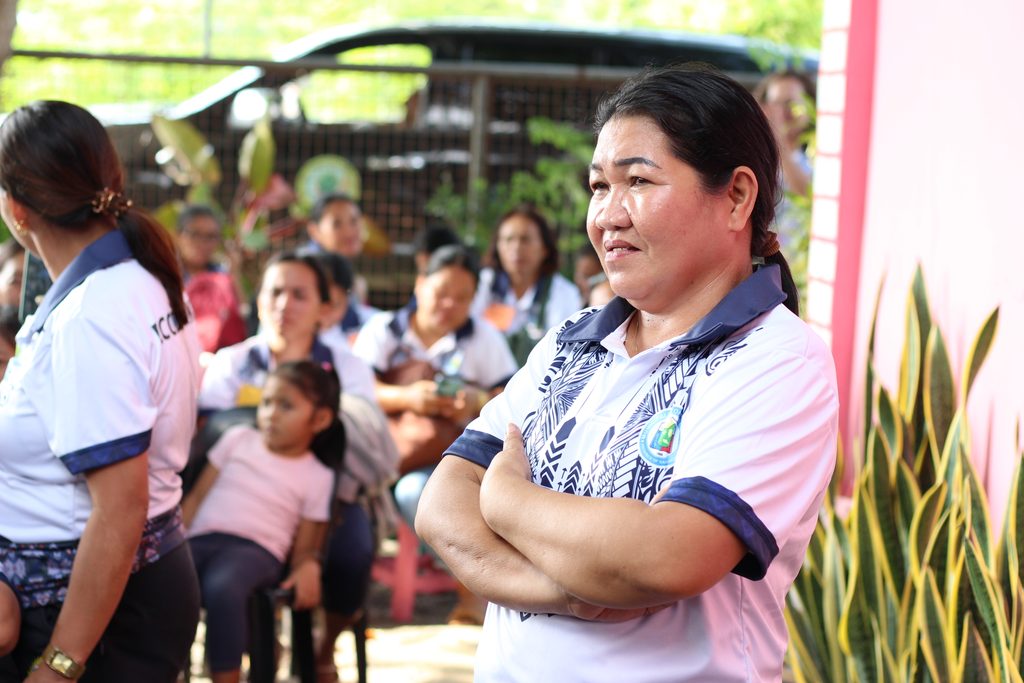
Anessa T. Maguan participates in a Mental Health and Psychosocial Support (MHPSS) refresher training for Child Development Workers (CDWs) in Malapatan, Sarangani Province. Photo by Check Zabala.
For Anessa T. Maguan, caring for young children has always meant more than preparing them for school.
As the Early Childhood Care and Development (ECCD) Focal Person of Malapatan, Sarangani Province, she has spent years working alongside Child Development Workers (CDWs), helping create spaces where children can learn, play, and simply be children. Through her work, she has seen how much young children depend on the adults around them to guide, nurture, and protect them during their most formative years.
“Child Development Workers play a vital role in a child’s life. We help shape their foundation beyond the home, and in many ways, we become their second parents.”

A Child Development Worker from Malapatan engages a young learner in identifying the color of a flower during a psychosocial support session conducted in the aftermath of the earthquake. Photo by Check Zabala.
That belief took on an even deeper meaning when a powerful 7.8 magnitude earthquake struck the community.
In the days that followed, families struggled to make sense of what had happened. While parents worried about their homes and livelihoods, many children were left carrying fear and uncertainty. As Anessa visited evacuation sites with ChildFund and its local partner, Ha Uman, she saw firsthand how deeply the disaster had affected even the youngest children.

ChildFund staff Erwin Galido and Kim Garcia, together with Anessa T. Maguan, visit an evacuation site in Malapatan and speak with children to better understand their experiences and well-being following the earthquake. Photo by Check Zabala.
Many were hesitant to leave their parents’ side. Some became unusually quiet, while others burst into tears at the sound of aftershocks or sudden noises. Watching children who were usually energetic and playful become withdrawn and fearful was heartbreaking.
“After the earthquake, we worked closely with ChildFund and Ha Uman. Together, we visited evacuation sites, listened to families, and looked for ways to support children during a very difficult time.”
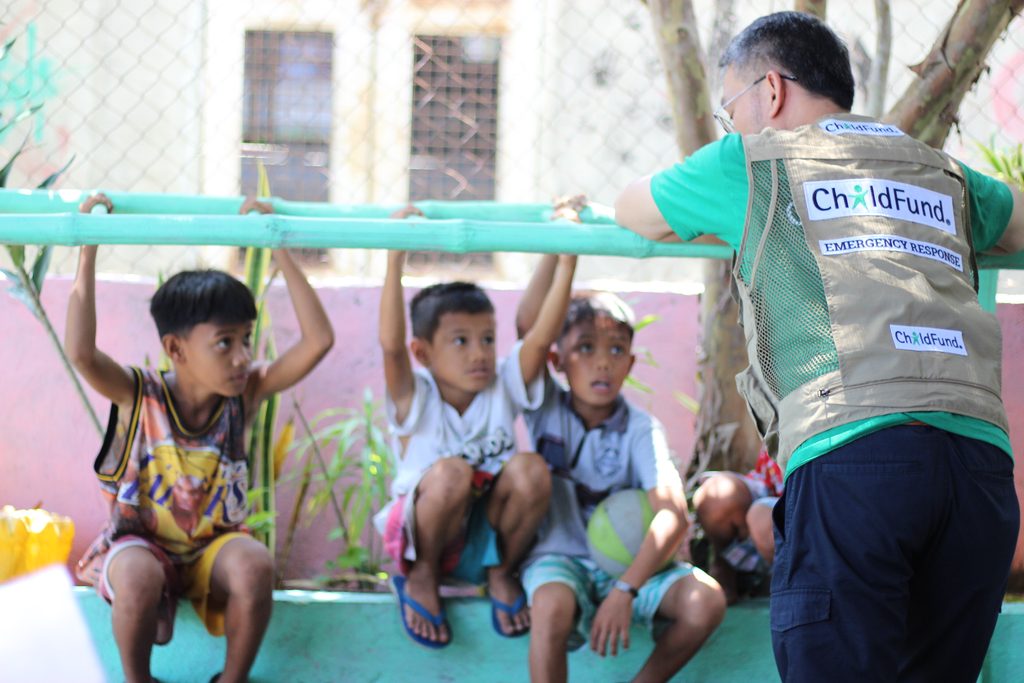
Jorge Sabiña (right) interacts with children at a Child Development Center in Malapatan following a Mental Health and Psychosocial Support (MHPSS) session for children and parents. Photo by Check Zabala.
While CDWs were experienced in supporting children’s learning and development, helping children cope with the emotional impact of a disaster was something many had never been trained to do.
To address this need, ChildFund and Ha Uman, in partnership with the Municipality of Malapatan, trained 53 Child Development Workers on Mental Health and Psychosocial Support (MHPSS) and Psychological First Aid (PFA). The training equipped them with practical tools to recognize signs of distress, facilitate child-friendly activities, support parents, and help children process difficult emotions after the earthquake.
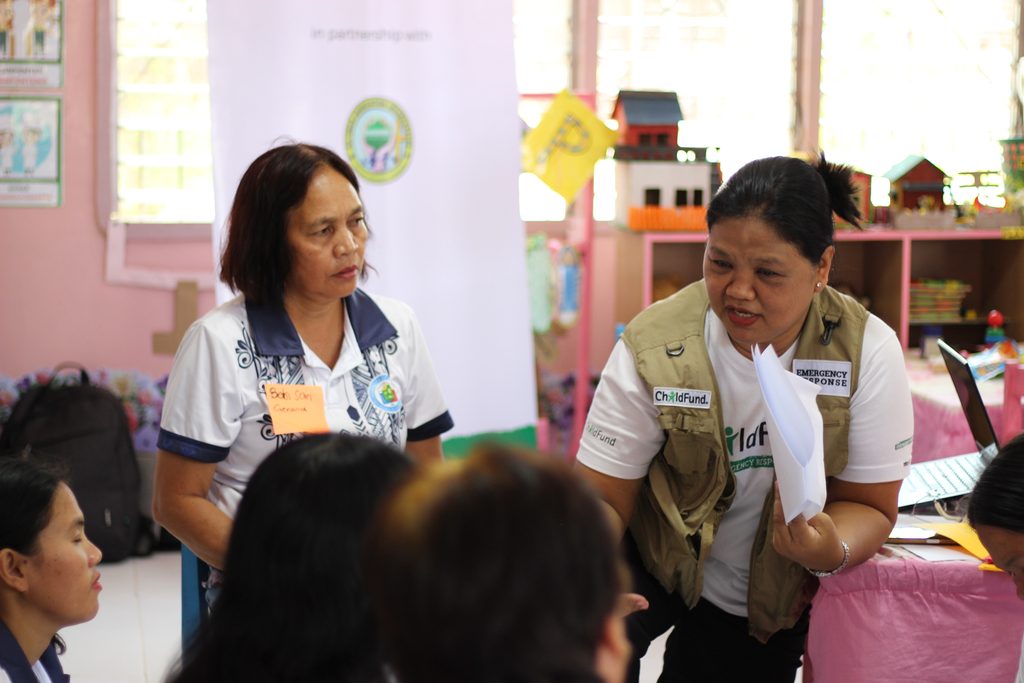
Loren Francisco (right) facilitates a session for Child Development Workers during a refresher training on Mental Health and Psychosocial Support (MHPSS) and Psychological First Aid (PFA). Photo by Check Zabala.
For many CDWs, the training also provided clarity and confidence during a time when they themselves were affected by the disaster. Instead of wondering where to begin, they gained the knowledge and skills needed to support children and families in a more structured and effective way.
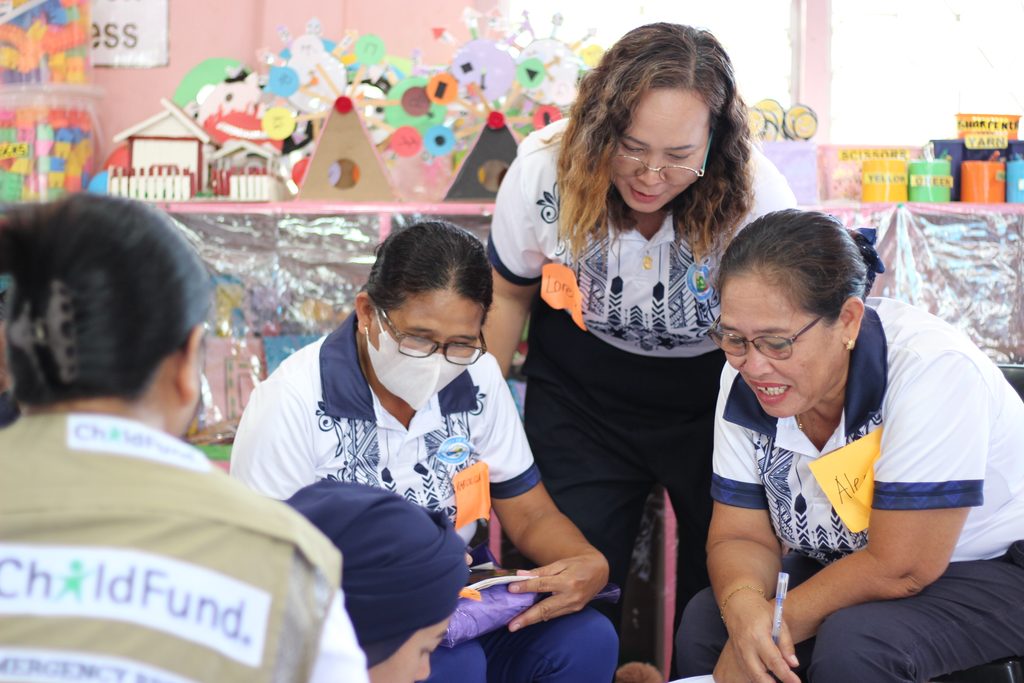
Child Development Workers from Malapatan participate in a hands-on activity during an MHPSS and PFA training session. Photo by Check Zabala.
The support extended beyond training. ChildFund worked alongside the municipality to help CDWs roll out psychosocial support activities for children and parents, distribute learning kits to 38 Child Development Centers, and provide multipurpose cash assistance to 300 families.

Anessa T. Maguan (second from right) observes a psychosocial support session for children as part of ChildFund’s earthquake recovery interventions in Malapatan.
Recognizing that frontline workers also needed support, ChildFund and Ha Uman later conducted debriefing sessions, refresher trainings, and psychosocial support activities for more than 50 CDWs. These sessions allowed them to process their own experiences, manage stress, and strengthen their capacity to continue caring for others.
Together, these efforts reached more than 3,400 children, parents, and caregivers across Malapatan.

A Child Development Worker from Malapatan shares her experiences and reflections during a debriefing and psychosocial support session organized by ChildFund. Photo by Check Zabala.
Yet beyond the numbers, what stayed with Anessa most were the changes she saw in the children themselves.
The activities gave children opportunities to play, connect with their peers, and express emotions they had struggled to put into words. Little by little, the fear and anxiety many carried began to ease.
Children who had become quiet and withdrawn started smiling again. They participated in activities, engaged with friends, and gradually regained a sense of normalcy. While the earthquake is not something they will easily forget, many were able to reclaim a sense of joy, safety, and peace.
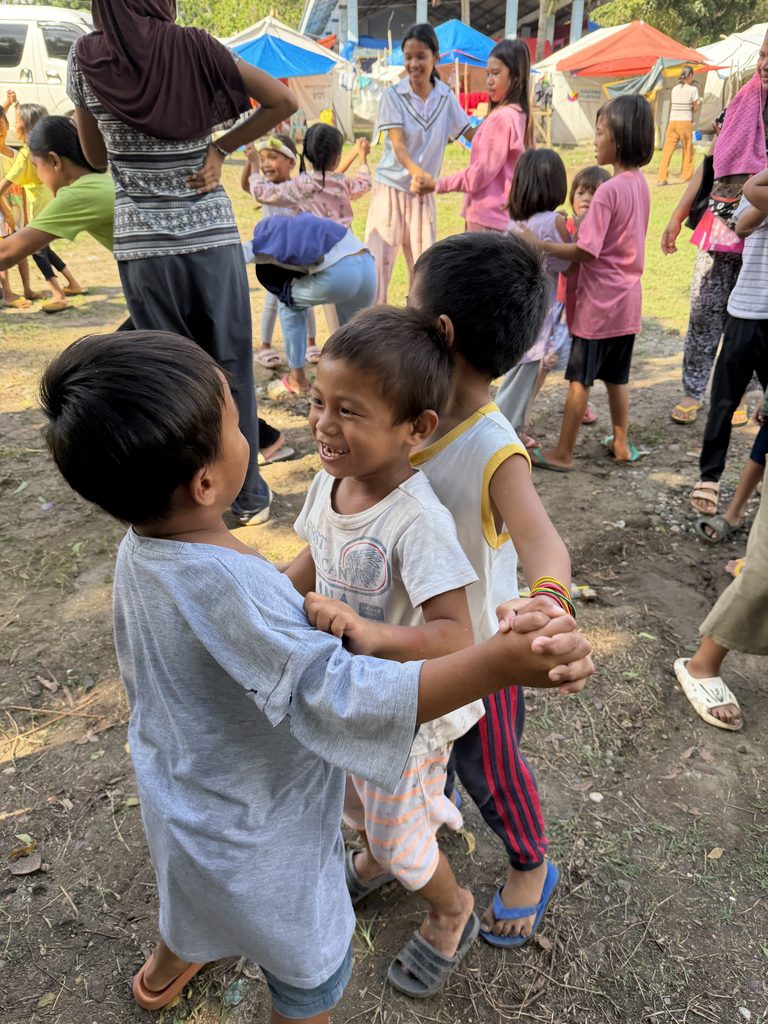
Children staying in an evacuation site in Malapatan take part in a game of Bahay, Bata, Bagyo (Home, Child, Typhoon) during one of ChildFund’s psychosocial support sessions. Photo by Kim Garcia
Parents also benefited from the psychosocial support sessions. As they processed their own fears and anxieties, they became better equipped to provide comfort, reassurance, and stability for their children during recovery.
Perhaps one of the most lasting changes was the confidence Child Development Workers gained through the experience.
“We were already supporting children before, but now we’re integrating what we’ve learned into our daily work. If another disaster happens, we’ll know how to respond and help children begin their recovery.”
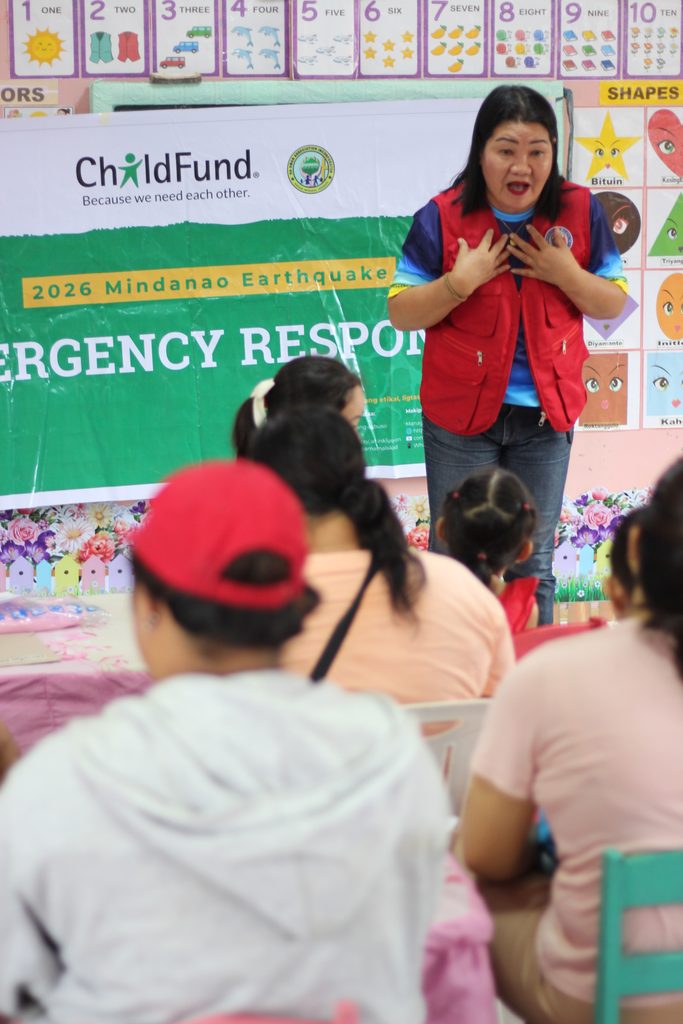
Anessa T. Maguan (right) speaks with parents during a Mental Health and Psychosocial Support (MHPSS) session organized by ChildFund. Photo by Check Zabala.
The experience also changed the way Anessa thinks about ECCD.
Before, disaster preparedness and early childhood development were often viewed as separate concerns. Today, she sees them as inseparable. Children cannot learn, grow, and thrive if they do not feel safe, supported, and understood during times of crisis.
That realization now shapes her advocacy efforts.
She is bringing these lessons to the Local Council for the Protection of Children (LCPC), where she is advocating for stronger ECCD plans and budget allocations in Malapatan. Her goal is to secure continued support for Child Development Workers and ensure that mental health, psychosocial care, and disaster preparedness are embedded in local ECCD programs.
Through the response, one lesson became clear: children recover best when the adults around them are equipped to guide and support them.
What Anessa witnessed in evacuation sites, and later in Child Development Centers across the municipality, continues to shape the future she wants for Malapatan’s children. By championing stronger child-centered plans today, she hopes that when the next emergency comes, the community will be ready, and every child will have the support they need not only to recover, but to thrive.
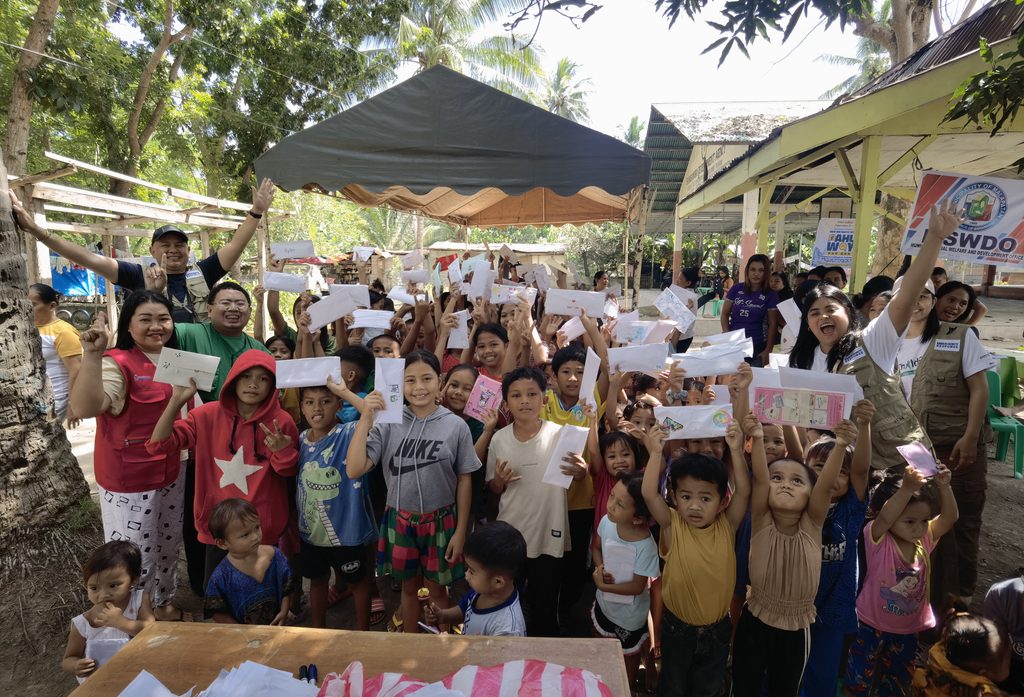
Anessa T. Maguan (front left), together with ChildFund staff and children in an evacuation site in Malapatan, shares a joyful moment following the distribution of learning materials. Photo by Check Zabala.