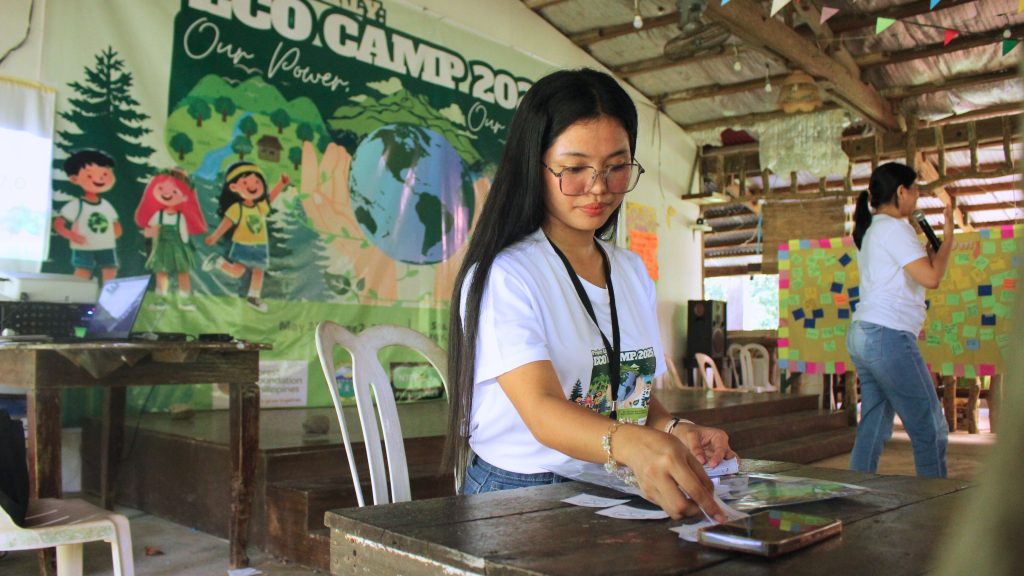
AJ was in seventh grade when she joined her first eco-camp in her hometown in Quezon—a youth gathering focused on the role of young people in caring for the environment and building resilient communities. At the time, it felt like just another way to pass the summer. She had no idea those few days would change how she saw the world—and her place in it.
“I joined my first eco-camp not knowing what to expect. I just thought it would be a fun way to spend the summer,” AJ shares. “But it opened my eyes, and over the years, it opened doors too. From learning to lead clean-ups to guiding younger kids, I discovered I had a voice and that it could make a difference.”
That first eco-camp helped AJ realize that environmental issues aren’t just about forests, oceans, or wildlife—they shape the lives of real people, especially in vulnerable communities like hers. In Quezon, a coastal province often struck by typhoons, AJ grew up surrounded by stories of floods, landslides, and families forced to rebuild after every storm. But it wasn’t until the camp that she saw how protecting nature was also a way to protect her community.
The camp was part of ChildFund Philippines’ Environmental and Community Resilience and Sustainability (ECRS) program. ECRS supports children and youth in understanding the environmental challenges around them and taking part in local solutions. The program promotes ecosystem restoration and conservation, sustainable livelihoods and technology, behavior change and policy advocacy, environmental education, and active youth leadership. It also includes Child Protection in Emergencies (CPiE) and Disaster Risk Reduction (DRR)—giving young people the chance to learn how to protect themselves and help their communities do the same.
For AJ, what once felt distant became deeply personal. And from that point on, she kept going.
After her first eco-camp, she began joining clean-up drives, tree-planting activities, and youth-led projects that made a visible difference in her neighborhood. She returned to the camp year after year—not just as a participant, but as a youth facilitator helping others find their own voice.
Now 19 and studying Public Administration, AJ continues to lead through Project Greenlight, a community-based initiative that’s part of the ECRS program. Active in towns like Real, Infanta, and General Nakar in Quezon, Project Greenlight brings nature and people together to build resilience. It uses Ecosystem-Based Adaptation (EbA) and Nature-Based Solutions (NbS)—like reforestation, coastal protection, and nature-smart farming—while giving youth meaningful roles in protecting their communities from environmental risks.
As part of the project, AJ and her fellow eco-scouts lead regular activities for younger children. These include storytelling sessions, clean-up events, and playful campaigns that promote everyday eco-friendly habits. When she’s not helping organize eco-camps, AJ is busy teaching children, planting trees, and working alongside local volunteers to plan environmental projects that matter.
She’s no longer the quiet girl just looking for something to do over the summer. Today, AJ is someone younger children look up to—a leader in her own right.
Becoming an eco-scout changed AJ in ways she never expected. She learned to speak with confidence, to lead activities, and to organize events that bring people together. She uncovered strengths she didn’t know she had and found real purpose in sharing what she’d learned with others.
“I never thought I’d be someone who could lead,” she says. “But these camps helped me find my voice.”
As she continues her journey as an environmental youth leader, AJ carries with her the values shaped by nature and nurtured by her community: care, responsibility, and the belief that small, consistent efforts can lead to lasting change.