Maria Jessica Bactol (ChildFund Philippines), Arden Christian Hipolito (ChildFund Philippines), Maria Rizza Benjamin (Evident), Translations by Morsid Macabangin (ChildFund Philippines)
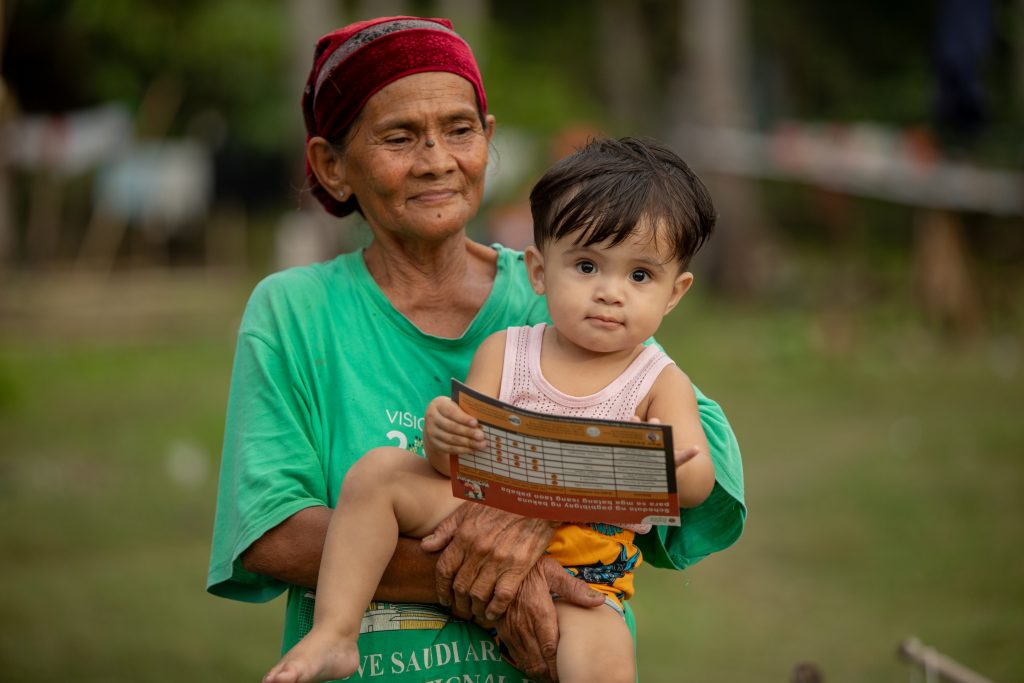
Before sunrise in the municipalities of the Bangsamoro Autonomous Region of Muslim Mindanao (BARMM) Special Geographic Areas (SGA), two families begin their routine trip to the vaccination center—what would be a brief walk elsewhere stretches here into hours over narrow, unforgiving terrain.
In Malidegao, Arazin Salasal, 34, readies her one-year-old daughter, Najeera, as her husband, Hamsa Salasal, also 34, prepares for the long walk ahead. “We need to go back and forth to the health center just to make sure all our children are vaccinated,” Hamsa says. “It takes time away from work.”
Several kilometers away in Nabalawag, Norhanisa Dagadas, 38, and her husband, Tahir Dagadas, 39, tread across uneven roads without a motorbike to ensure their one-year-old son, Ahmad, receives his vaccines. “Sometimes we rely on the midwife to come to us,” Norhanisa shares. “If it gets too hard, we call her, and she helps us.”
Barriers beyond the clinic
These two families reflect the realities faced by many across BARMM SGAs, where only about 4% of children in 2023 were fully immunized, far below the 95% needed for herd immunity.
Part of the challenge stems from the lack of established governance systems. The eight SGA municipalities, including Nabalawag and Malidegao, were created in 2023 by the Bangsamoro Parliament as part of their integration into BARMM. As a result, health services, particularly immunization delivery, follow-up, and tracking, are still being built from the ground up—making access and coordination difficult.
Caught between these gaps, both parents and health workers are left to navigate challenges on their own. For families like the Salasals and the Dagadas, limited transport and long distances make a routine health trip a full-day journey. Moreover, cultural and religious norms fuel vaccine hesitancy. Fathers often control health decisions, while elders reinforce fears about vaccination, further delaying consent. “My parents didn’t believe in midwives. They even hid us before so we wouldn’t get vaccinated,” Norhanisa recalls.
For barangay health workers, traveling between far-flung puroks and tracking missed children with limited staff and resources makes their work even harder. “In mountainous areas, it’s hard to reach families, and parents struggle to get to the health center, so vaccinations are often delayed or missed,” said Esmael Abdillah, midwife in Malidegao.
Immunization as a shared responsibility
Recognizing these barriers, the Department of Health (DOH), the Ministry of Health-BARMM, and the Special Geographic Area Field Health Office (SGA-FHO) worked closely with development partners including UNICEF Philippines, ChildFund Philippines, Gavi: Vaccine Alliance, and Ha Uman Association Incorporated to bring vaccines closer to every child—even in the farthest puroks.

From the municipal level, leaders aligned priorities with health teams through situational analysis and microplanning workshops that mapped hard-to-reach areas, identified transport gaps, and allocated resources for immunization delivery. At the barangay level, local leaders strengthened their health leadership and management competencies through the Community Health Leadership, Governance and Management Program (CHLGMP), designed to institutionalize data-driven planning, mobilize local resources, and embed immunization targets within municipal systems. Furthermore, health workers received training on Basic Immunization and Cold Chain and Vaccine Management to ensure safe handling and systematic tracking of vaccines, and the Reaching Every Purok Strategy, a health systems strengthening approach that promotes collaboration for effective implementation and immunization service delivery to reach all children within communities. Moreover, ustadhs (muslim religious leaders) and other non-health community leaders were engaged through the Bakuna Champions program to address concerns, dispel myths, and guide families toward informed decisions grounded in public health and faith. With strengthened supervision and monitoring systems, health teams were better able to track missed doses and follow up when children fell behind.

Finally, through community outreach guided by strengthened local microplans, health teams were able to ease the long journeys that once kept families from reaching health centers. Parents’ classes were held at community hotspots such as local kubos, where ustadhs promoted vaccination in line with the fatwa (a religious ruling in Islam) and the teachings of the Holy Qur’an, urging fathers to take an active role in safeguarding their children’s health. Moreover, barangay health workers were equipped with the skills and resources to conduct repeated household visits—bringing care directly to families, answering fears and concerns, and identifying additional support needed to complete immunization. “Even if our child gets sick, we’re confident vaccination will help them recover quickly,” said Hamsa, reflecting how classes and home visits strengthened vaccine confidence and household decision-making.
This multisector effort was further sustained and strengthened through the support of the Resilient Immunization through Strengthened Ecosystems–Reaching Every Purok (RISE-REP) CDS 3 Plus Project, reinforcing collaborative systems and integrated approaches that helped maintain coordination and service delivery across geographically isolated municipalities.
A celebration for the Bangsamoro
After months of planning and outreach, children like Najeera and Ahmad now walk triumphantly onto the stage at the FIC graduation, where the entire community—parents, ustadhs, and health workers—comes together to celebrate not only the completion of the children’s vaccinations, but also the long and arduous journey that they once crossed for their health, protection, and safety.
“In Islam, we don’t celebrate birthdays, so this gives families a way to honor their child, as they complete all routine vaccines by the time they turn one,” said Abdulatip Abdulgani, Municipal Health Councilor of Nabalawag.

This milestone reflected the trust built over months of visits, guidance, and encouragement from different sectors working together to ensure every child was vaccinated. “Our strategy uses local culture and language to meet families where they are,” explained Jefferson Gregorio, Health & Nutrition Specialist, ChildFund Philippines.
For families like the Salasals and the Dagadas, having their children walk up on stage was a proud moment, a reassurance that they could grow up healthy and become active members of their communities. “Seeing them graduate makes us very proud,” said Hamsa. “We’re happy, and so are the kids. I hope they grow up healthy.”
A purok to raise every child
With immunization now a community effort, FIC coverage rose from 4% in 2023 to 33% in 2024 and to nearly 60% in 2025, with routine childhood vaccine coverage improving across municipalities.
“Our target is still 95%, but moving from 4% to 60% shows that the community is ready to sustain this through capacity building, supervision, and close collaboration with local health units,” said Dr. Alieja Meling, Medical Officer 5 of SGA-FHO.

For communities facing the same barriers as BARMM, the project provides a sustainable and replicable model by equipping health workers and leaders with the training, support, and cross-sector collaboration needed to build lasting systems. Immunization efforts are embedded into local investment plans, strengthened through ordinances and dedicated funding, and reinforced by continuous supportive supervision focused on improved service delivery and data quality. “This creates an enabling environment that empowers everyone to take ownership. When communities lead the way, we can ensure that even the most underserved children are reached,” said Dr. Madonna Añabieza, Immunization Officer, UNICEF Philippines.
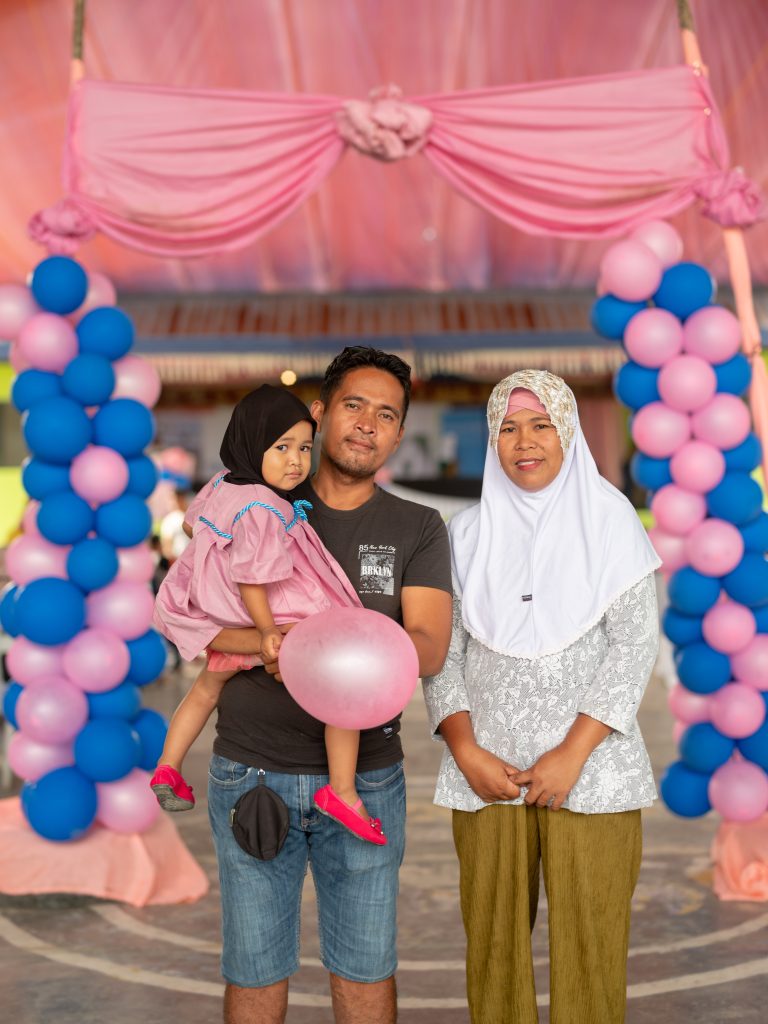
While the numbers tell one story of progress, the truer measure lives in homes like those of the Salasals and the Dagadas—families who once faced long journeys to health centers, doubts shaped by culture and tradition, and the daily limits of scarce resources—but whose children are now vaccinated thanks to the tireless work of local leaders, health workers, and ustadhs. “The vaccines will protect our child from diseases,” Arazin and Norhanisa said. “We want our children to be healthy.”
For them, immunization became one way their community raises its children to become future leaders and peacebuilders of BARMM—one purok at a time.