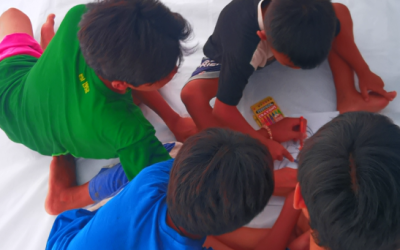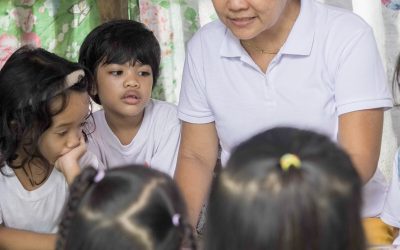
Following the 7.8-magnitude earthquake that affected more than 10,000 families in Tupi, South Cotabato, a partnership between the local government, ChildFund Philippines, and local partner Ha Uman demonstrated how trust, shared responsibility, and collective action can help children, families, and communities begin to heal and recover
By Check Zabala

Emil Sumagaysay, Municipal Disaster Risk Reduction and Management Officer (MDRRMO) of Tupi, South Cotabato, presents a map of the municipality while discussing the communities affected by the 7.8-magnitude earthquake. Photo by Check Zabala
In the days following the 7.8-magnitude earthquake that shook South Cotabato, Emil Sumagaysay found himself balancing two realities.
As Tupi’s Municipal Disaster Risk Reduction and Management Officer (MDRRMO), registered social worker, and development planner, he was helping coordinate emergency response efforts across affected communities. At the same time, like many residents, he and his family were also living through the disaster’s aftermath.
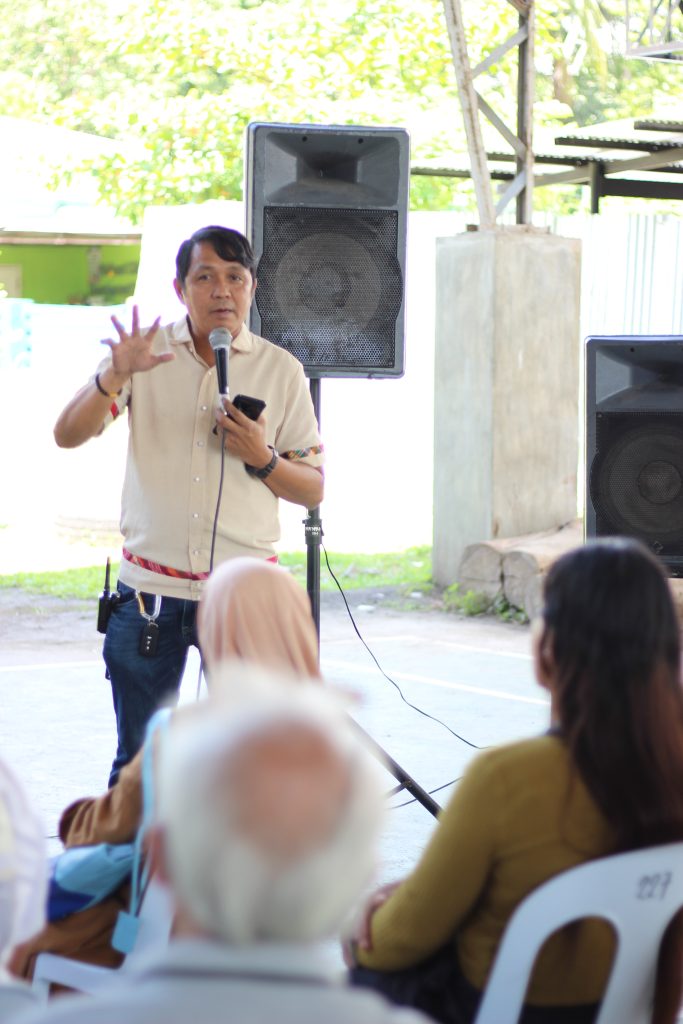
Emil Sumagaysay welcomes and orients community members during a joint earthquake response activity led by the Municipality of Tupi, ChildFund Philippines, and local partner Ha Uman. Photo by Check Zabala
“The most difficult thing we experienced as first responders was that we were affected too. Our families were among those impacted by the earthquake. But we had to manage because we have a responsibility to help. That is our mandate. Passion and compassion for our work are what keep us going. Our communities need help, and we have to heed the call.”
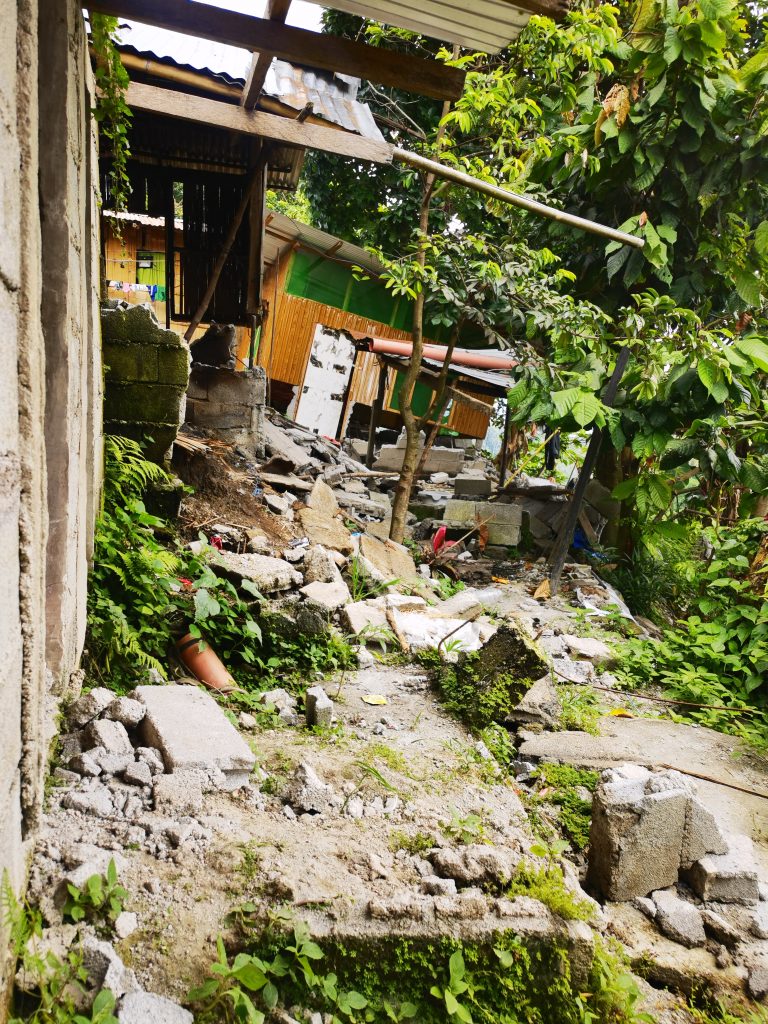
A damaged house lies in rubble in one of the affected barangays in Tupi, South Cotabato, following the 7.8-magnitude earthquake. Photo by Check Zabala
The earthquake affected more than 10,000 families in Tupi. Homes were damaged, schools were left unsafe, and hundreds of families were displaced. As the local government mobilized its response, the scale of the disaster quickly highlighted the need for strong partnerships.
For Emil, what made the difference was trust. Trust built long before the earthquake struck.
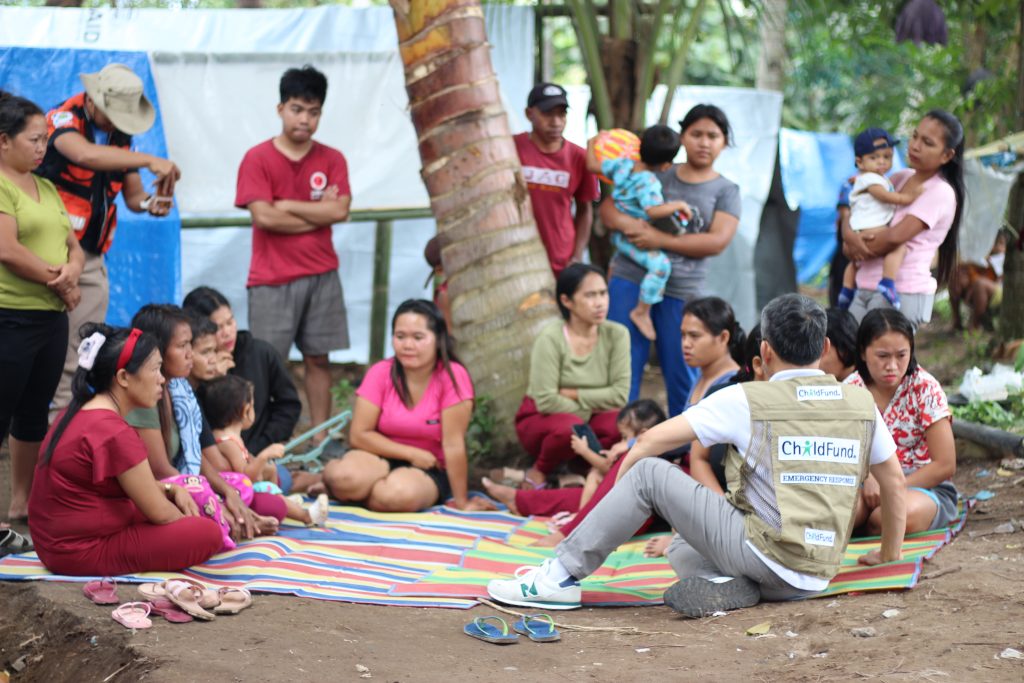
Adults participate in a Mental Health and Psychosocial Support Services (MHPSS) session facilitated by ChildFund in an earthquake-affected barangay in Tupi, South Cotabato.
Photo by Check Zabala
ChildFund Philippines and its local partner, Ha Uman, had already been working alongside the municipality through programs focused on resilience, child protection, and community development. When the earthquake hit, those existing relationships enabled a faster, more coordinated response, extending support not only to ChildFund program areas but also to some of Tupi’s hardest-hit barangays.
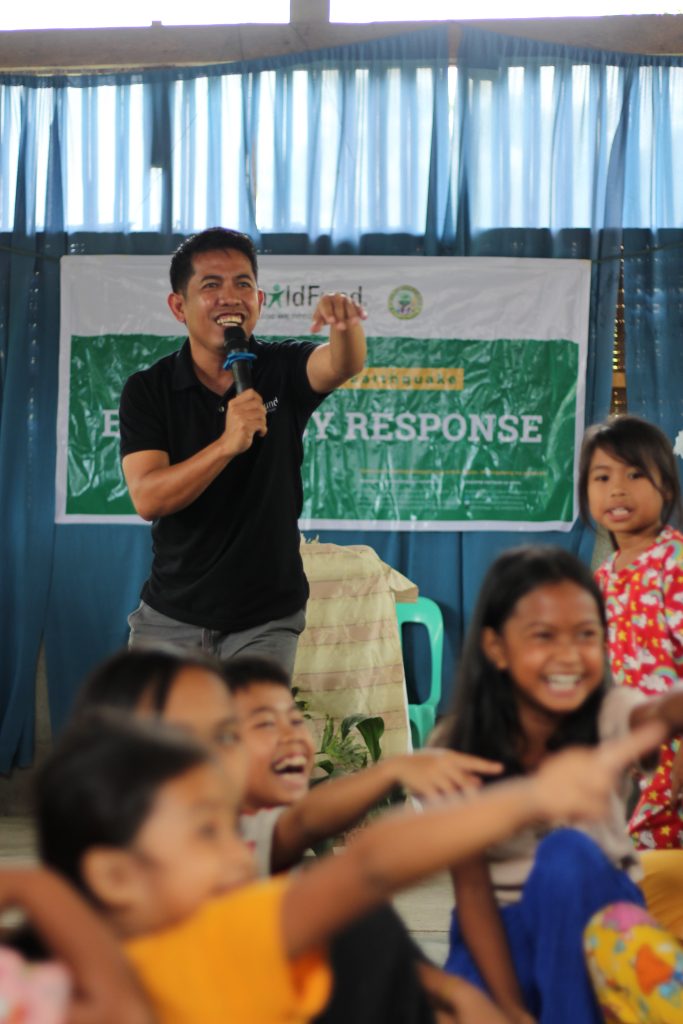
Children take part in a Mental Health and Psychosocial Support Services (MHPSS) activity conducted by ChildFund in an earthquake-affected community in Tupi, South Cotabato.
Photo by Check Zabala
One of the first concerns was the emotional well-being of children and families.
“In the first 72 hours, we need to manage the emotional and mental health of children. Not just children, but entire communities, including us responders. You cannot avoid being affected because you witness what is happening in your own community.”
While families worried about damaged homes and uncertain futures, many children were struggling to understand what had happened. Recognizing the importance of early intervention, ChildFund and Ha Uman worked alongside the local government to provide Mental Health and Psychosocial Support Services (MHPSS) and Psychological First Aid (PFA).

A local government worker facilitates a psychosocial support session for children in an earthquake-affected barangay in Tupi, South Cotabato. Photo by Check Zabala
These activities created safe spaces where children, youth, and adults could express their emotions and begin processing their experiences. By July 8, the services had reached 2,478 people across five villages.
For Emil, the impact became visible through simple moments.
“I saw children drawing the incident. Through these simple activities, they were able to share their experiences and feelings. They were able to unload and process what they had gone through.”
He believes these spaces are critical in preventing long-term emotional distress.
“Psychosocial services are important for children because they help them unload their fears and anxieties. If these are not handled properly and early, they can lead to trauma, emotional distress, and long-term mental health challenges.”
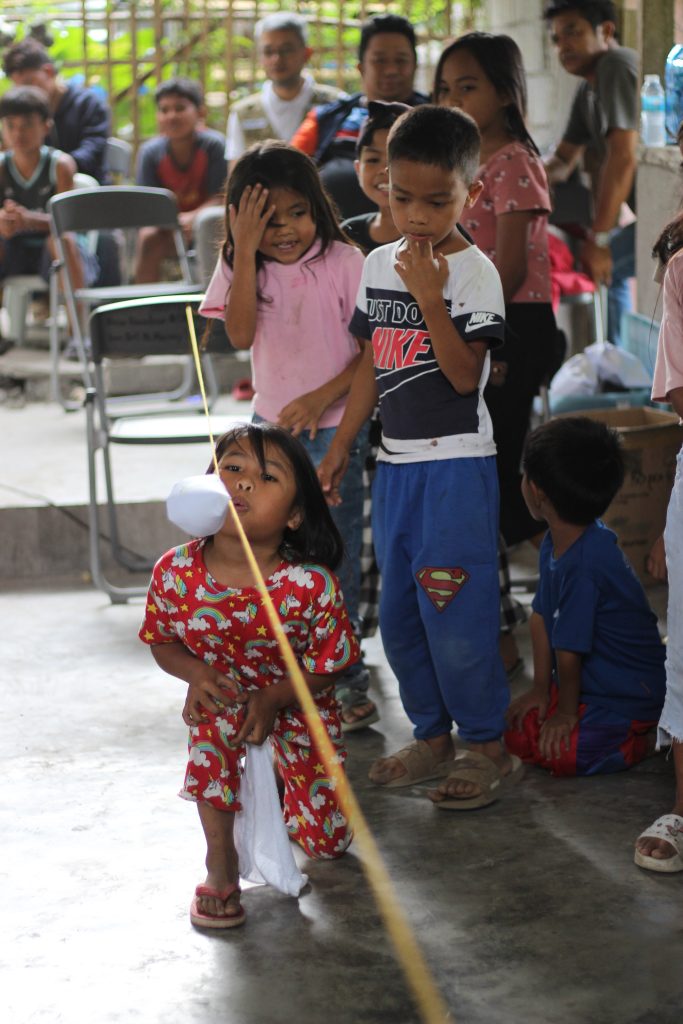
Children participate in play-based activities during a psychosocial support session in Tupi, South Cotabato, helping them express emotions and process their experiences after the earthquake. Photo by Check Zabala
The support extended beyond direct services. ChildFund trained 35 local government personnel and teachers on MHPSS and PFA to help continue psychosocial support in their communities. Community volunteers from organizations established through ChildFund’s Climate Care Project, implemented with support from the European Union, were also mobilized to assist affected families.
For Emil, this showed the value of investing in communities before disasters happen. The volunteers were not outsiders arriving after the earthquake. They were trusted community members equipped to help their neighbors during times of crisis.

Community leaders from Barangay Lunen, Tupi, South Cotabato, participate in a debriefing and psychosocial support session following the earthquake. Photo by Check Zabala
As families began addressing the emotional impacts of the disaster, many were also facing practical challenges. Some needed to repair damaged homes, replace belongings, or meet their family’s daily needs while trying to recover.
To help ease these burdens, ChildFund provided multi-purpose cash assistance to 320 affected households. The support gave families the flexibility to prioritize what mattered most, allowing them to make decisions based on their own circumstances and immediate needs.

Local government personnel support the distribution of ChildFund’s multi-purpose cash assistance to earthquake-affected families in Tupi, South Cotabato. Photo by Check Zabala
Young people also played an important role in the response.
Eco-Scouts, environmental youth leaders organized through ChildFund’s Environmental and Community Resilience and Sustainability Program, stepped forward to support affected communities. Working alongside Ha Uman and the local government, they helped distribute food packs, supported psychosocial activities for children, and produced weekly radio and online episodes that shared information about the earthquake while promoting mental health and child protection.
Their commitment left a lasting impression on Emil.
“We are looking at the next generation. If we do not act, what will happen to the next generation? That is why youth are among the most important people. We are inspired by our Eco-Scouts. Even though they are still young and are volunteers, they are very willing to help the community.”
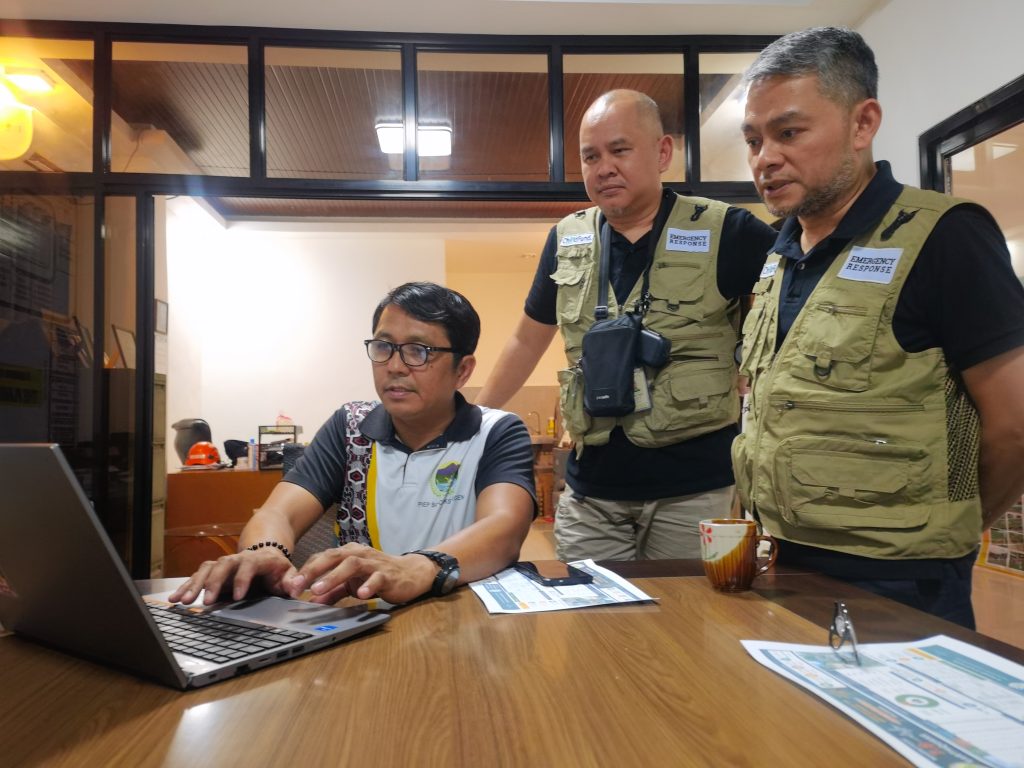
(Left to right) Emil Sumagaysay, Erwin Galido, and Jorge Sabiña demonstrate the use of Project RAMDAM, a digital platform that supports relief allocation, distribution, and monitoring during disaster response. Photo by Check Zabala
The partnership also strengthened the municipality’s ability to manage relief efforts. During the response, Tupi utilized Project RAMDAM (Relief Allocation Management, Distribution, and Monitoring), a digital platform established through ChildFund’s partnership with Geographic Innovations for Development Solutions, Inc. (GrIDS). The system helped local authorities track affected families and manage assistance more efficiently.
Looking back, Emil believes the response demonstrated the power of collaboration.
“Partnerships and joint efforts are important because they create a convergence of efforts and resources. ChildFund and other organizations complemented the work of the local government, making it possible to deliver the services our communities needed. The local government has limited resources, but through the support of partners like ChildFund, the impact becomes much greater.”

(Left to right, back) Emil Sumagaysay, Tupi Mayor Romeo Tamayo, and Kim Garcia of ChildFund discuss ongoing earthquake recovery efforts during a multi-purpose cash assistance activity. Photo by Check Zabala
The response in Tupi is part of ChildFund’s broader earthquake recovery efforts across South Cotabato and Sarangani, where more than 6,000 children, youth, and adults have been reached through emergency and recovery interventions. As communities continue to heal and rebuild, ChildFund remains on the ground, working with local governments, communities, and partners while seeking and forging new collaborations to expand recovery and resilience efforts across affected areas.
Today, the impact of those partnerships can be seen in children who found safe spaces to heal, families who received support when they needed it most, and communities that continue to move forward together.
In Tupi, recovery started with trust. And through partnership, that trust continues to help communities rebuild and heal.
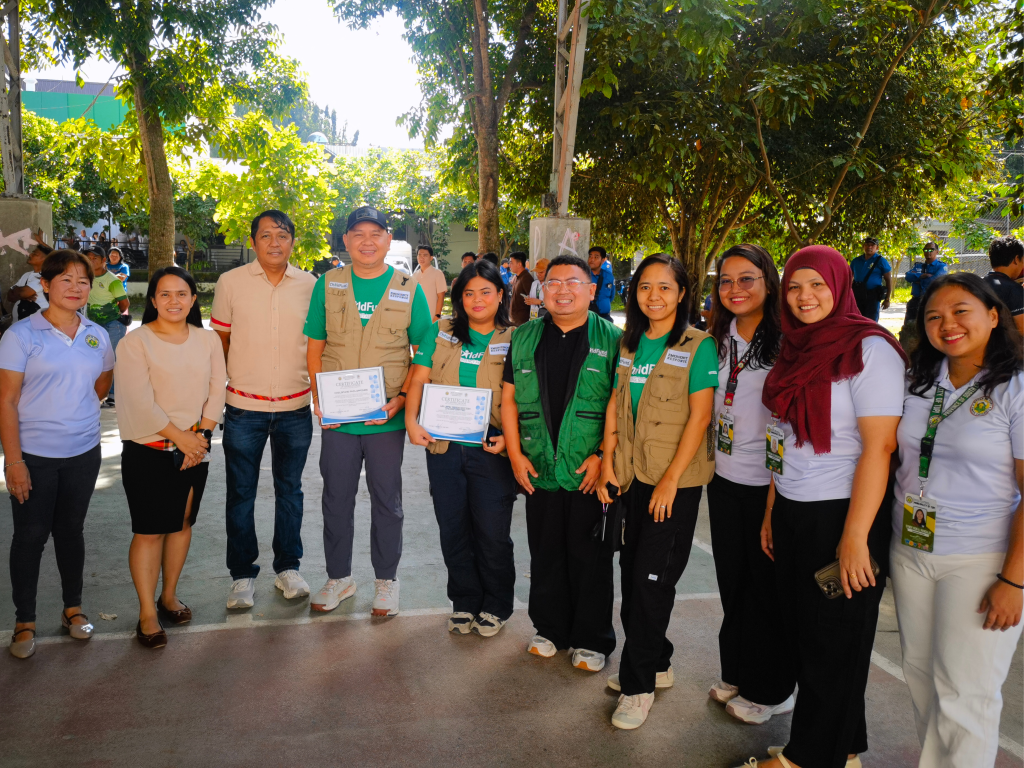
Representatives of the Local Government Unit of Tupi and ChildFund Philippines pose for a photo after ChildFund received recognition from the municipality for its contributions to disaster response and community recovery efforts. Photo by Check Zabala